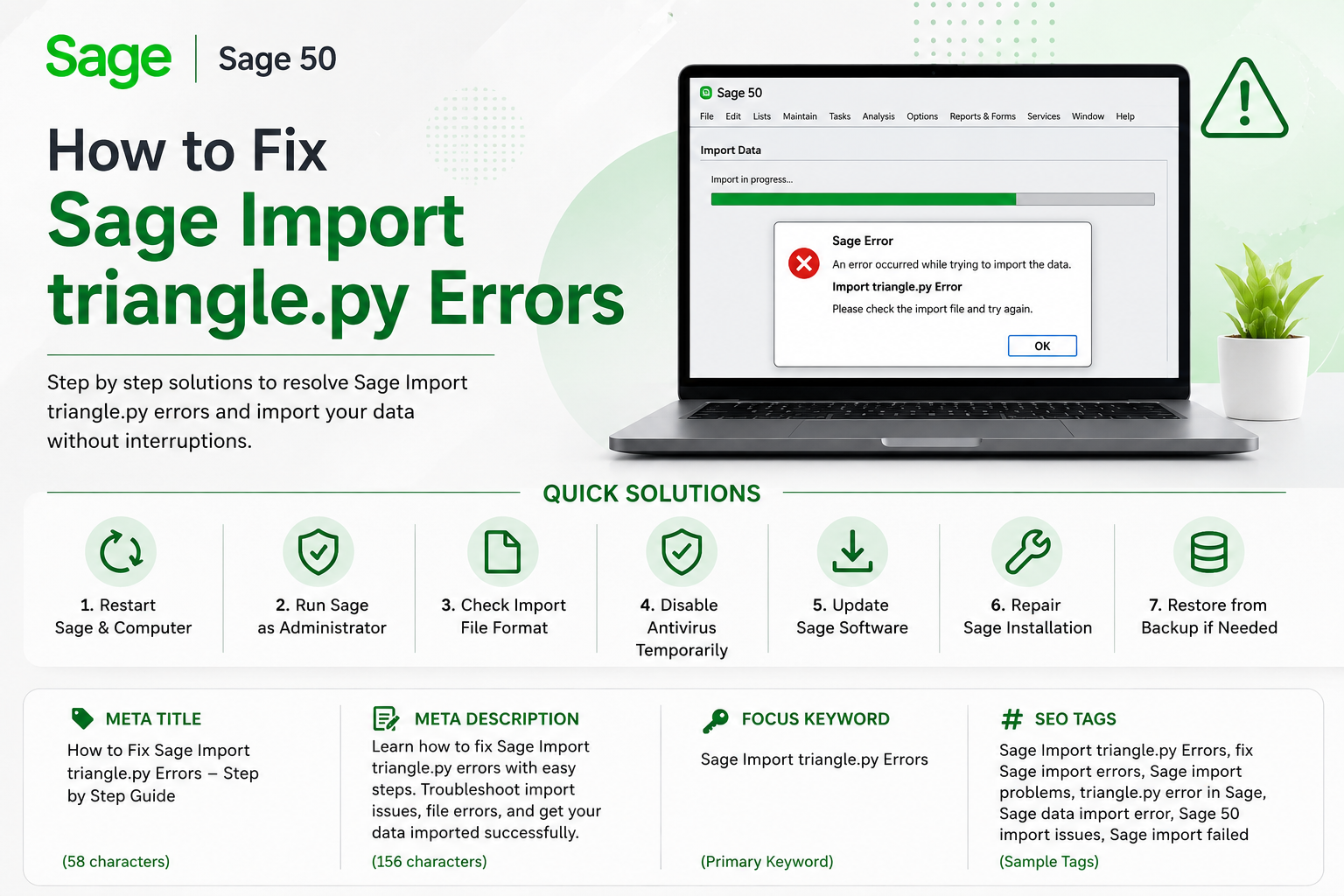
Sage Import triangle.py Errors usually appear when the software fails during data import processes because of damaged Python components, corrupted import files, permission conflicts, or incomplete Sage installations. This error can interrupt accounting work suddenly and leave users confused because the message itself sounds extremely technical.Most people see the word “triangle.py” and immediately think something serious has broken inside the system. Honestly, that reaction is understandable.
The error name looks more like a coding issue than a normal accounting software problem.In many cases though, the issue is connected to import failures, damaged background files, outdated Sage components, or Windows conflicts that can actually be fixed without advanced programming knowledge.The frustrating part is that the error often appears while importing important customer records, invoices, vendor lists, payroll data, or financial transactions. Right in the middle of urgent work.
This guide explains practical methods that help resolve Sage Import triangle.py Errors step by step without making things unnecessarily complicated.
The triangle.py error in Sage is generally connected to Python based import processes running in the background.Sage uses internal scripts and processing modules during certain import operations. If those scripts fail to execute correctly, the software may display triangle.py related errors.
Users commonly encounter this issue while:
• Importing CSV data
• Restoring accounting records
• Updating company information
• Migrating data from another system
• Running custom integrations
• Processing batch imports
The error may appear differently depending on the Sage version being used.Sometimes the software freezes completely. Other times it simply displays an unexpected script related message and stops importing data.
Before troubleshooting the issue, it helps to recognize the warning signs.Some common symptoms include:• Import process suddenly stops
• Sage freezes during data upload
• Error messages mentioning triangle.py
• Software crashes during import tasks
• Missing imported records
• Slow system performance
• Unexpected application shutdowns
• Import wizard refusing to continue
Some users also notice that Sage becomes unstable even after restarting the software.That usually indicates damaged background components.
Why Sage Import triangle.py Errors Happen
There is not always one single reason behind this problem.Usually several technical factors combine together
Corrupted Import File
One damaged CSV or Excel file can trigger import script failures instantly.Sometimes users unknowingly import files containing invalid characters, broken formatting, or incomplete data fields.Sage struggles to process such files correctly.
Damaged Sage
ComponentsIncomplete updates or interrupted installations may damage internal Sage files connected to import functions.This becomes more common on older systems.
Python Environment Conflicts
Certain Sage versions rely on embedded Python components for processing imports.If these components become corrupted, triangle.py errors may appear.
Windows Permission Problems
Lack of administrator permissions prevents Sage from accessing required folders during imports.This causes script execution failures.
Antivirus Interference
Aggressive antivirus software occasionally blocks import scripts mistakenly.Especially real time protection systems.
Large Import Files
Huge data imports sometimes overload system resources. Older computers with limited RAM struggle more in such situations.
Method 1: Restart Sage and the Computer It sounds basic, but temporary import conflicts often disappear after restarting the system properly.Close Sage completely first.
Restart:
• Sage software
• Computer system
• Server if working in multi user modeAfter rebooting, try importing the file again.
Sometimes temporary memory conflicts trigger the error unexpectedly.
Method 2: Run Sage as Administrator
Permission related problems frequently interrupt import operations.
Right click the Sage icon and choose Run as Administrator.This gives the software full access to required import folders and background services.A surprising number of import errors disappear after this simple step.Especially on Windows 10 and Windows 11 systems.
Method 3: Check the Import File Carefully
This step matters more than most users realize.Review the import file for:
• Blank mandatory fields
• Invalid symbols
• Broken formatting
• Duplicate entries
• Unsupported characters
• Missing columns
Even one incorrect data field can trigger Sage import failures.CSV files copied from older accounting systems often contain hidden formatting problems.
Method 4: Import a Small Sample File
Instead of importing thousands of records immediately, test with a smaller sample file first.If the smaller file imports successfully, the issue may be related to corrupted entries inside the original dataset.This method helps isolate the actual problem faster.Honestly, many users waste hours troubleshooting software when the real issue sits inside the import file itself.
Method 5: Disable Antivirus Temporarily
Antivirus software sometimes blocks Sage import scripts silently.Temporarily disable antivirus protection and retry the import process.If the issue gets resolved, add Sage folders to antivirus exclusions afterward.Do not leave protection disabled permanently though.
Method 6: Update Sage SoftwareOutdated Sage versions often contain unresolved import bugs.
To update Sage:
Open Sage
Navigate to Help
Check for updates
Install the latest available version
Restart the system afterward
Software updates frequently repair damaged components related to import processing.
Method 7: Repair Sage Installation
If internal files are damaged badly, repairing the installation becomes necessary.Steps:Open Control Panel
Go to Programs and Features
Select Sage 50
Click Repair
Follow the repair instructions
Restart the computer once the process completes.Even if the system does not specifically request it.
Method 8: Clear Temporary Files
Large temporary file accumulation sometimes interferes with import functions.To clear temporary files:Press Windows + R
Type %temp%
Delete unnecessary temporary files
Restart the computer
Systems running low on storage often experience unpredictable software behavior.
Method 9: Restore from Backup if Needed
If the import process damages company data or creates instability, restoring a recent backup may become necessary.This is why maintaining backups matters so much.Especially before large imports.A lot of businesses unfortunately skip backups because everything “seems fine” until something suddenly breaks.
Method 10: Reinstall Sage Completely
If none of the troubleshooting methods work, reinstalling Sage may become necessary.Before reinstalling:
• Create backups properly
• Save license information
• Export important company data
Then remove Sage completely and install a fresh updated version.This helps replace corrupted program components causing the triangle.py error.
Final Thoughts
Sage Import triangle.py Errors look intimidating mainly because the message sounds highly technical. But in reality, many cases are connected to damaged import files, outdated software, permission conflicts, or corrupted background components that can be repaired systematically.The biggest mistake users make is rushing through imports without validating data properly beforehand.Accounting software handles sensitive financial information. Even one damaged import can create serious confusion later.Take the troubleshooting process step by step calmly instead of experimenting randomly.Most importantly, maintain proper backups consistently. That single habit saves businesses from enormous accounting disasters later.